About TU Wien
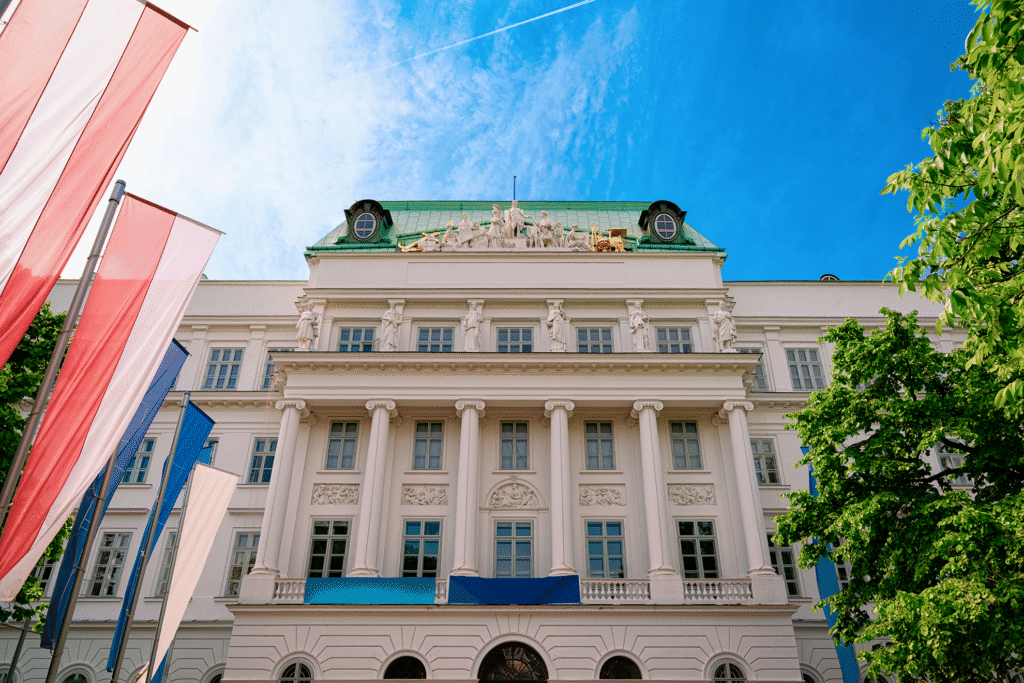
TU Wien (Technische Universität Wien) is one of Europe’s leading technical universities, internationally recognized for excellence in research, innovation, and education. Located in the heart of Vienna, TU Wien combines a strong engineering tradition with forward-looking research addressing global challenges such as sustainability, climate action, digitalization, and urban development. With close ties to industry, public institutions, and international research networks, TU Wien serves as a hub for knowledge transfer and real-world impact. TU Wien offers strong academic credibility, global visibility, and direct engagement with a leading European centre for technology-driven solutions.
Technology for People
The TU Wien is Austria’s largest research and educational institution in the field of technology and natural sciences. More than 4,000 scientists are researching “technology for people” in five main research areas at eight faculties. The content of the studies offered is derived from the excellent research. More than 26,000 students in 62 degree programmes benefit from this. As a driver of innovation, TU Wien strengthens the business location, facilitates cooperation and contributes to the prosperity of society.
At TU Wien, we have been conducting research, teaching and learning under the motto ‘Technology for people’ for over 200 years. TU Wien has evolved into an open academic institution where discussions can happen, opinions can be voiced and arguments will be heard. Although everyone may have different individual philosophies and approaches to life, the staff, management personnel and students at TU Wien all promote open-mindedness and tolerance.
History
The TU Wien was founded in 1815 as the “Imperial & Royal Polytechnic Institute.” Its origins lie in the growing need during the 18th and early 19th centuries for technically and scientifically trained specialists. Similar institutions were emerging across Europe, with the École polytechnique in Paris serving as a key model. The planning and structure of the institute were largely shaped by Johann Joseph Prechtl, who envisioned it as a university-like institution with academic freedom.
From the beginning, the institute had multiple roles: providing technical education, showcasing industrial and scientific developments, and promoting economic growth. Throughout the 19th century, it became the largest technical educational institution in the Habsburg Empire and influenced the development of similar schools across Europe. Student numbers increased significantly, leading to major reforms in 1865/66, including restructuring into specialized schools and introducing stricter admission requirements.
In 1872, the institute was transformed into a technical university, gaining greater academic rights. Over time, it was granted the authority to award doctoral degrees. The university continued to expand in size, infrastructure, and academic offerings.
Both World Wars had a major impact. During World War I, student numbers declined sharply and facilities were used for military purposes. Under National Socialism from 1938, the university experienced severe political interference: many professors and students were dismissed or excluded for political or racial reasons, especially Jewish members.
After World War II, the university underwent a process of reconstruction and denazification. It gradually modernized its structure and expanded its academic programs. Women had already been admitted as full-time students in 1919, and throughout the 20th century new fields such as information technology, spatial planning, and business engineering were introduced.
From the 1970s onward, several reforms reshaped the university’s organization and study system. New laws increased autonomy and internal governance. With the Universities Act of 2002, TU Wien gained full legal independence and adopted a modern organizational structure.
Today, TU Wien is a leading technical university with eight faculties, offering a wide range of programs and playing an important role in research and education both in Austria and internationally.